Imagine you send an email about an upcoming event, new offer, or promotion.
A few customers open it right away. Others mean to come back to it later. Some see it briefly while checking email between meetings, errands, or everything else competing for their attention that day.
Then the inbox keeps moving.
That doesn’t mean the email failed. It simply means one message often has a short window to do its job.
This is where print can help.
Instead of treating email and print as two separate campaigns, think of them as two parts of the same conversation.
Let Email Make the Introduction
Email is great when you need to get information in front of people quickly.
Maybe you’re announcing an open house, introducing a seasonal offer, or inviting customers to register for an event. Email can give them the first look and an easy way to click for details.
But that first email doesn’t have to do everything.
Suppose someone reads your event announcement on Monday and thinks, “That sounds interesting.” By Thursday, they may barely remember the date.
A printed reminder arriving a few days later brings the message back without asking them to search through their inbox.
Give the Printed Piece Its Own Job
The print piece shouldn’t just be the email copied onto paper.
Ask what would be useful once the message is in your customer’s hands.
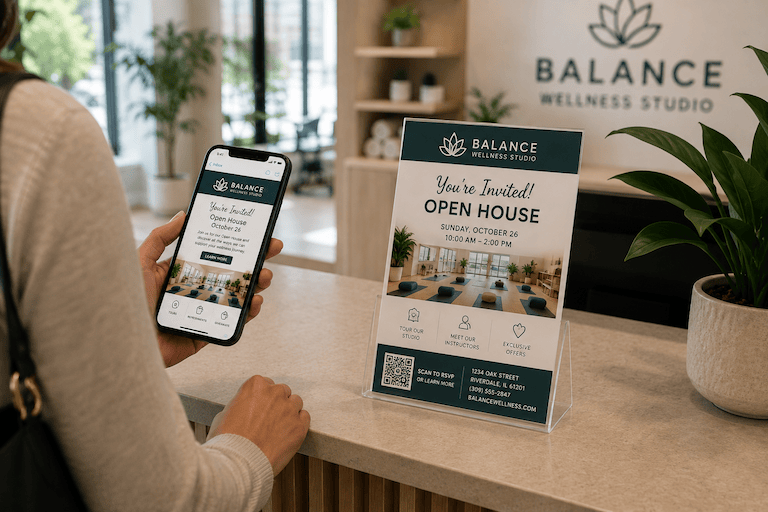
For an event, that may be a postcard with the date, location, and registration information in one easy-to-save place. If you’re promoting a service that takes more consideration, a handout could give customers a short overview they can keep nearby or share with someone else involved in the decision.
Now the two channels are doing different work.
The email introduces the idea. The print piece gives it staying power.
Make It Feel Familiar
Your customer should recognize that the email and printed piece belong together.
That doesn’t mean the layouts need to match exactly. Carrying over the same main image, offer, headline, colors, or overall message is usually enough to create the connection.
Think about seeing a familiar ad in more than one place. You don’t stop and analyze why you recognize it. You just know you’ve seen it before.
That same familiarity can help your campaign feel more connected.
Make the Next Step Easy
Print can also bring customers right back online.
If your postcard asks someone to register, a QR code can take them directly to the registration page. A printed offer can point to the exact page where the promotion is explained or redeemed.
The keyword there is directly.
Sending someone to your general homepage and asking them to hunt for the right information adds another hurdle. If you already know what you want them to do, make that route easy.
Give Your Message Another Chance to Be Noticed
Not every email campaign needs a printed follow-up.
But when the message matters enough to repeat, has a deadline, or includes information your customer may want to keep, print can give it another life outside the inbox.
The best place to start isn’t with, “Should we send an email or print something?”
Start with the message.
Then ask what email can do well, what print can add, and how the two can work together without simply repeating each other.
If you’re planning an upcoming campaign, tell us what you want customers to remember or do. We can help you choose a printed piece that fits naturally alongside your digital marketing.


Leave a Reply